In our practice, to ensure the maintenance of a healthy mouth, we recommend a preventive check-up every 6 months in order to promptly address any problems. This check-up includes teeth cleaning, dental and oral examination and education of the patient for proper and effective oral hygiene.
Preventive check-ups are important for both adults and children, in whom the eruption of teeth and their fluoridation are also checked with the aim of a beautiful and healthy smile.
Aesthetics and Restorative Dentistry
Our goal is to create a smile that improves the patient’s psychology and reflects their uniqueness. There are several techniques for applying aesthetic dentistry and each is applied depending on the experience of each dentist.
Options such as:
Resin veneers
Porcelain veneers
All-ceramic crowns
Zirconia crowns
Whitening in the office and with braces at home
Dental Surgery
The most common dental procedure is filling and is due to caries. It is usually found accidentally during a dental check-up or is observed by the patient himself. The filling replaces the dental tissue that has been affected by caries. In addition, it is performed after a fracture.
Periodontology
Many times, patients report that when brushing their teeth they notice bleeding gums, or in more advanced cases even tooth mobility. The above is usually due to inflammation of the periodontium (gums) due to poor oral hygiene or due to heredity. Early diagnosis and effective treatment by the dentist is the cornerstone for treatment.
Prosthetic Restoration
The loss of teeth caused by the extraction of one or more teeth is treated through prosthetic restoration. In cases where the tooth deficiencies are limited and restoration with dental implants is not indicated, the treatment is done with a dental bridge, while in more generalized deficiencies, the restoration is done with partial or complete dentures. In addition, teeth that have a large lack of dental substance or are endodontically treated are fragile and have an increased likelihood of fracture. In this case, the use of a dental crown is recommended, which surrounds the tooth, thus increasing its strength while offering a high and aesthetic result.
Oral Surgery
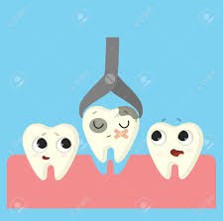
Many times due to carious damage or some injury to the tooth, the remaining amount of tooth is not enough to restore it. Through oral surgery it is possible to increase this amount. There are cases where this method is of course not sufficient and we are led to the extraction of the tooth. However, every day we are called upon to remove healthy, seemingly, teeth that cause problems in the periodontal tissues or in adjacent teeth. The most common category of such teeth are wisdom teeth. The clinical and radiographic examination as well as the surgical planning of their extraction, contribute to a process that is as quick and painless as possible for the patient.
Implants
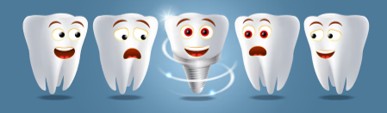
Dental implants are placed in the position of teeth when they are damaged or missing, to serve as a stable foundation for new teeth (crowns or bridges) or for the entire denture (jaw). The implant integrates with the bone and functions like a natural tooth, without affecting the surrounding tissues and adjacent teeth. The procedure for placing implants is an alternative to artificial dentures or bridges. Restoration with dental implants is beneficial because it avoids unnecessary ‘grinding’ of healthy teeth to place a bridge. Additionally, in cases of complete tooth loss, implant-supported restorations can provide the patient with a stable, permanent denture, unlike conventional dentures, which may become loose, occupy a large space in the mouth, and cause significant discomfort for the patients who wear them.
Orthodontics
We use orthodontic treatment with transparent splints to align the patient’s teeth. They are removable and discreet, which makes them the number one choice for adults who want to correct their smile, but without having to wear braces. These plastic splints are changed every two weeks, following the progress of the treatment. They are easily removed without injuring the gums and lips, so you do not need to change anything in your teeth cleaning routine.
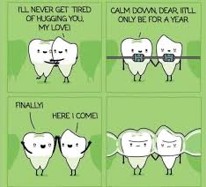
In complex and demanding orthodontic cases where transparent splints are not sufficient to correct the problem, classic braces are used.
Endodontics
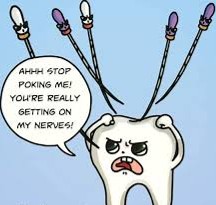
A daily challenge that the dentist is called upon to face is dental pain. The most common cause is carious lesions that have not been treated in a timely manner, resulting in microbes entering the pulp causing pain. Through endodontic treatment, the nerves of the tooth are removed, the root canal is chemically and mechanically cleaned and then filled.